What Is NI Reaktor? Inside the Modular World of Experimental Sound Design
An introduction to NI Reaktor and why it became one of the most powerful environments for cinematic sound design, modular synthesis, experimental audio, and custom instrument creation.
What Is NI Reaktor?
Most music software is designed to give producers finished tools.
Load a plugin. Choose a preset. Adjust a few knobs. Make music.
But NI Reaktor was never built around presets alone.
Reaktor was designed as an environment — a modular ecosystem where instruments, effects, synthesis methods, signal routing, sequencing systems, and experimental audio structures could all be built, modified, and transformed from the ground up.
For decades, Native Instruments Reaktor has remained one of the most powerful and misunderstood tools in modern audio production. To some producers, it is simply another synthesizer plugin. To sound designers, film composers, and experimental musicians, it is something far more important:
A laboratory for sound itself.
From granular synthesis and cinematic textures to procedural movement and modular experimentation, NI Reaktor became a cornerstone of modern cinematic sound design, electronic music production, and advanced sonic experimentation.
And even in an era dominated by AI tools, sample packs, and instant presets, Reaktor still feels strangely futuristic.
Beyond Traditional Plugins
Most modern plugins are closed systems.
The developer creates the interface, signal flow, modulation structure, and sonic behavior. The user interacts only with the front-end controls.
Reaktor works differently.
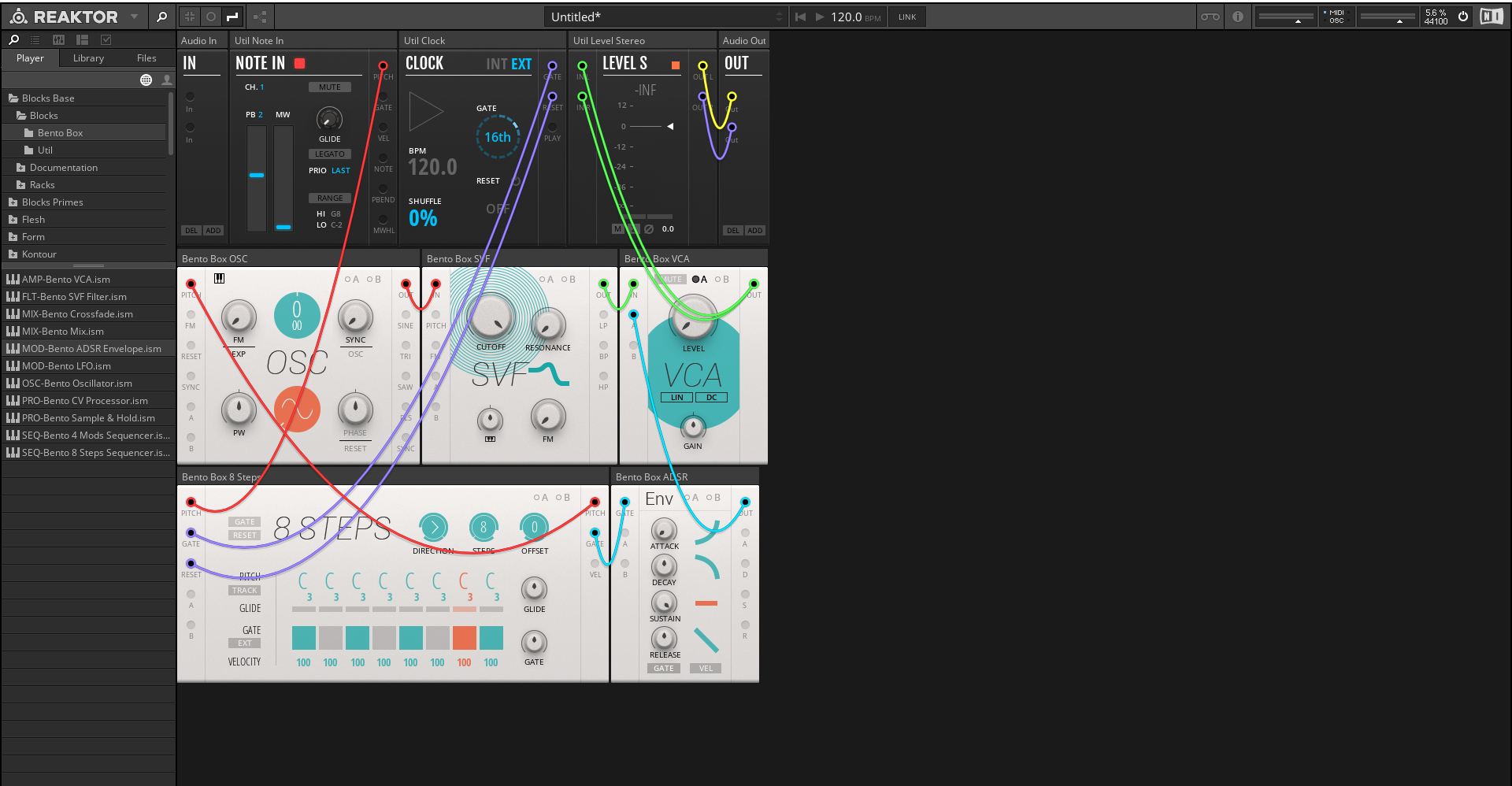
At its core, Reaktor is a modular audio environment where instruments can be constructed from smaller components. Oscillators, filters, envelopes, sequencers, logic systems, effects, macros, and DSP modules can all be connected together into entirely custom structures.
This flexibility is why Reaktor became legendary among advanced producers and experimental sound designers.
It is not simply a synthesizer.
It is an ecosystem for building synthesizers.
This distinction changes everything.
Instead of asking:
“What preset should I use?”
Reaktor encourages a different question:
“What kind of sound system do I want to create?”
That philosophical difference is what separates modular synthesis from traditional plugin workflows.
Why Reaktor Became Important in Cinematic Sound Design
Modern film audio depends heavily on movement, texture, atmosphere, tension, and evolving sonic detail.
Traditional synthesizers are excellent for stable sounds:
leads
basses
pads
keys
But cinematic audio often requires instability.
Film sound designers constantly search for:
evolving drones
procedural movement
granular atmospheres
organic modulation
unstable textures
hybrid sound layers
emotional sonic tension
This is where NI Reaktor became extremely valuable.
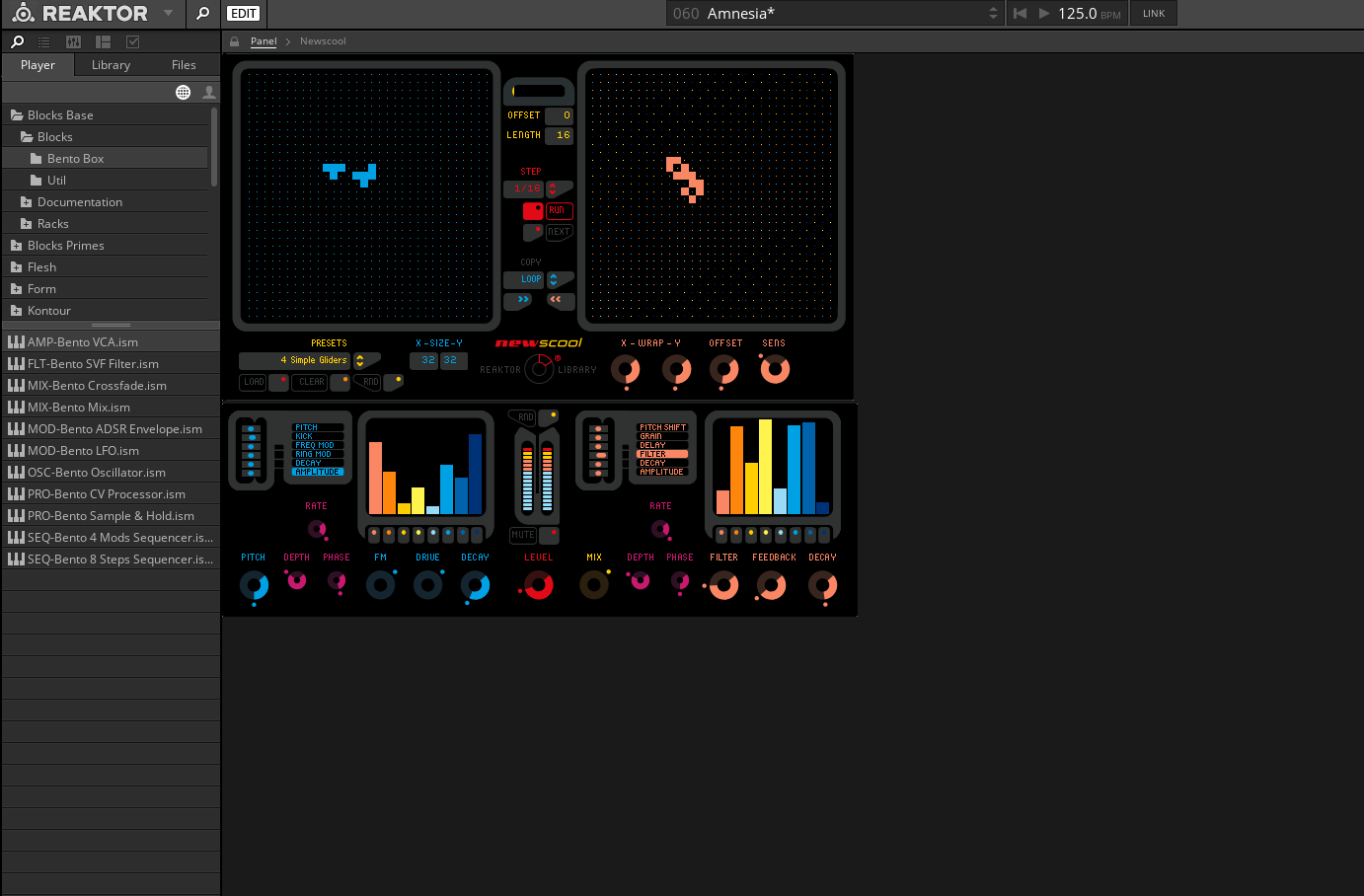
Because Reaktor allows producers to create deeply modulated systems, sounds rarely remain static. Tiny modulation changes can continuously evolve a texture over time, creating movement that feels alive rather than looped.
This became especially important in:
science fiction sound design
psychological horror
ambient composition
cinematic trailer music
experimental electronic production
game audio
dystopian atmospheres
Reaktor excels at creating sounds that feel impossible to categorize.
Not fully synthetic. Not fully organic.
Something in between.
The Rise of Experimental Audio
One reason Reaktor still matters is because it emerged before modern music production became heavily standardized.
Today, many producers work inside highly optimized workflows:
drag-and-drop loops
preset packs
algorithmic recommendations
social-media-ready templates
Reaktor came from a different philosophy.
It encouraged experimentation.
Failure was part of the workflow.
Unexpected results were often the goal.
This culture of sonic exploration attracted producers who wanted to push beyond conventional sound design. Instead of treating audio as a fixed product, Reaktor treated sound as a dynamic system capable of transformation.
This mindset heavily influenced modern:
experimental electronic music
cinematic sound design
modular synthesis culture
procedural audio
ambient production
generative composition
Even now, many modern sound design trends trace back to workflows Reaktor helped popularize years earlier.
Understanding Reaktor Blocks
One of the most important developments in modern Reaktor history was the introduction of Reaktor Blocks.
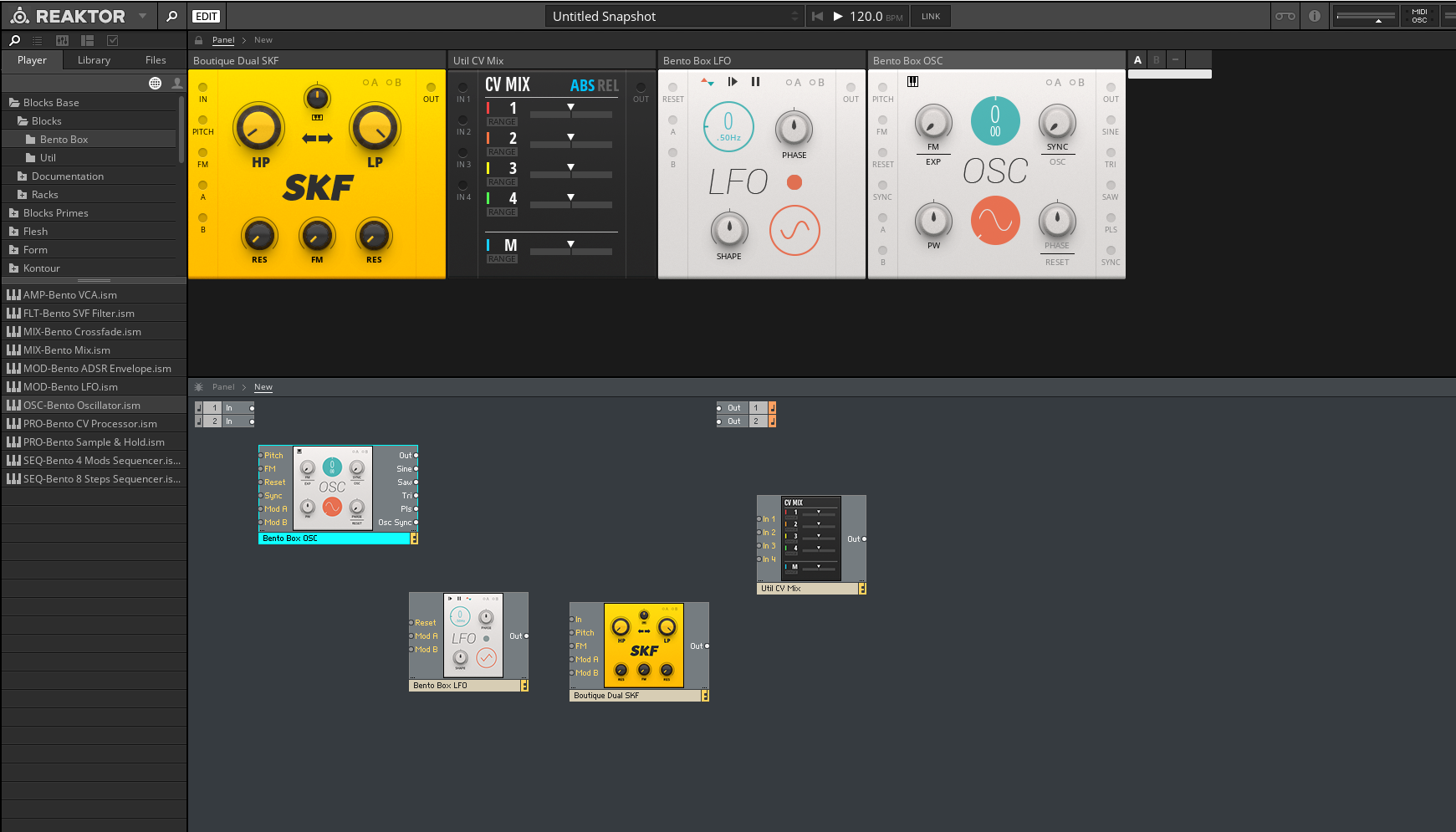
Blocks transformed Reaktor into a more accessible modular environment inspired by Eurorack hardware systems. Instead of manually constructing low-level DSP structures, users could patch together modular components visually.
Oscillators. Filters. LFOs. Envelopes. Sequencers. Utilities.
Each module behaves like a piece of modular hardware.
Signals are routed through cables, creating highly customizable signal paths and modulation systems.
For producers interested in modular synthesis, Reaktor Blocks became one of the most affordable and flexible entry points into modular thinking without requiring expensive hardware systems.
More importantly, Blocks changed how producers thought about sound.
Instead of using fixed instruments, producers could design dynamic ecosystems where sounds continuously evolved through interaction between multiple modulation sources.
This is one reason Reaktor-based sounds often feel more organic and cinematic than static preset-driven audio.
Granular Synthesis and Sonic Texture
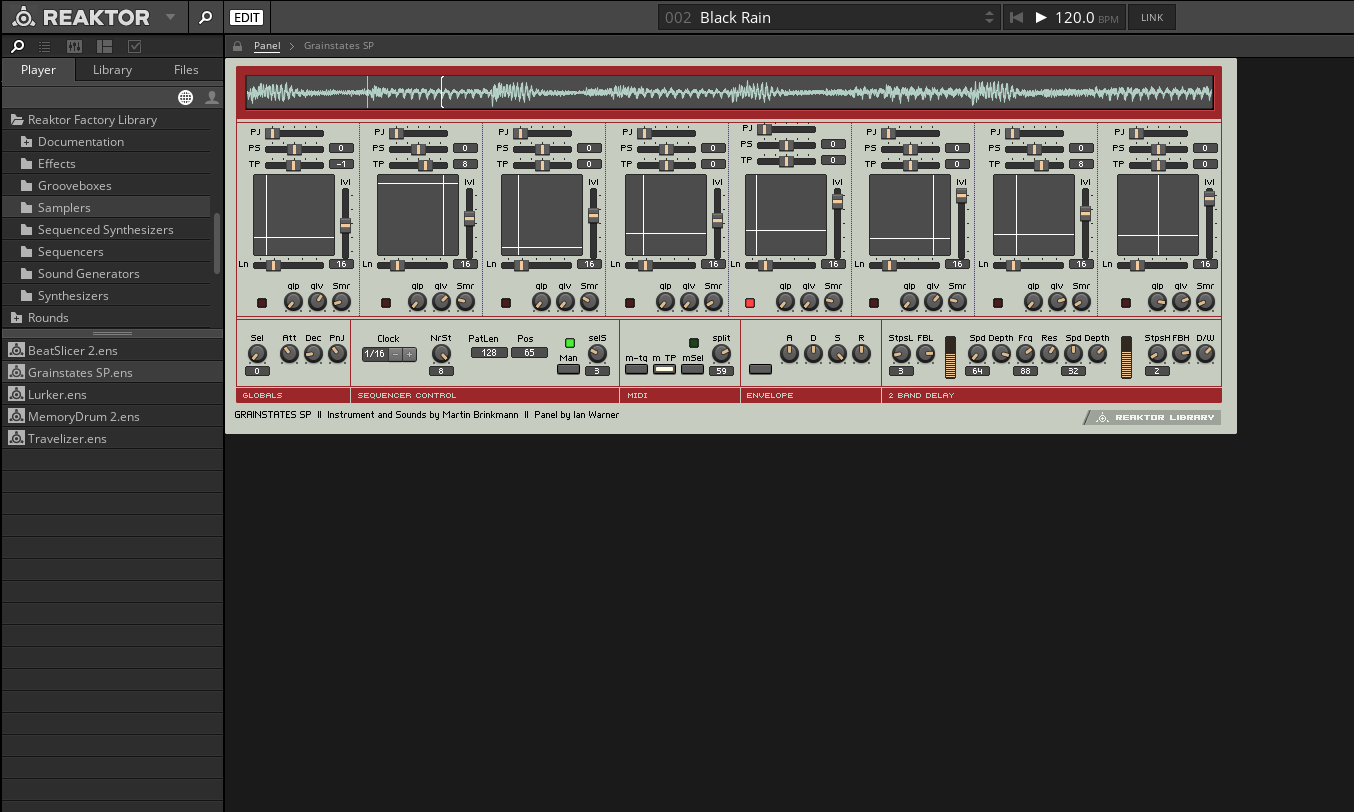
One of Reaktor’s greatest strengths is its relationship with granular synthesis.
Granular synthesis works by breaking audio into microscopic fragments called grains. These tiny grains can then be manipulated independently:
stretched
layered
randomized
reversed
scattered
spatialized
The result is often deeply atmospheric.
Granular systems can transform ordinary recordings into:
evolving drones
ghostly ambiences
cinematic textures
abstract atmospheres
emotionally unstable soundscapes
This became essential in modern film audio because granular processing creates movement that feels emotionally alive.
Instead of hearing repetition, the listener hears continuous transformation.
This is especially effective in:
sci-fi environments
psychological tension
dream sequences
horror sound design
emotional cinematic scoring
Many modern cinematic textures that audiences perceive as futuristic are actually rooted in granular synthesis techniques pioneered decades ago inside experimental environments like Reaktor.

Reaktor vs Kontakt
Many producers confuse NI Reaktor with NI Kontakt, but they serve very different purposes.
Kontakt is primarily a sampling platform. It focuses on playable instruments built from recorded audio libraries.
Reaktor focuses on sound generation and system design.
Kontakt is often:
orchestral
acoustic
sample-based
playback-oriented
Reaktor is often:
synthetic
procedural
experimental
modular
generative
While Kontakt dominates traditional media composition workflows, Reaktor occupies a more experimental space focused on sonic invention.
This difference explains why Reaktor became particularly influential among:
cinematic sound designers
avant-garde producers
modular enthusiasts
experimental composers
audio researchers
Kontakt recreates instruments.
Reaktor invents new ones.
Legendary Reaktor Instruments
Over time, Reaktor became home to some of the most respected instruments in modern sound design.
Razor
A spectral synthesizer known for aggressive futuristic textures, vocal-like harmonics, and cinematic movement.
Monark
A deeply analog-inspired synthesizer praised for its warmth and character.
Prism
A physical modeling instrument capable of glass-like textures, metallic resonance, and haunting atmospheres.
Form
A sample-based synthesizer that transforms audio into morphing cinematic textures.
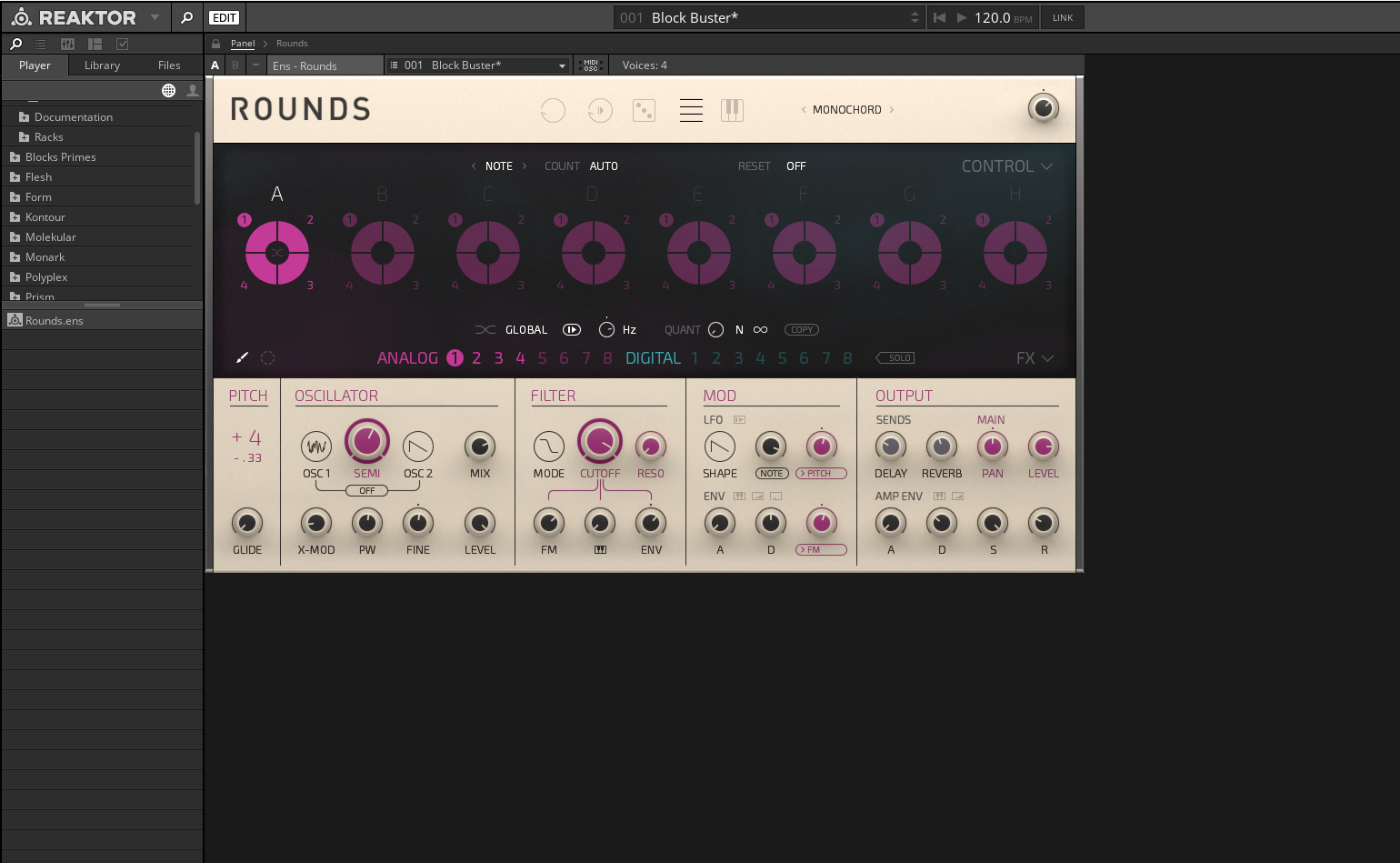
Rounds
A hybrid system combining sequencing, synthesis, and evolving modulation behavior.
Each of these instruments demonstrates Reaktor’s core philosophy: sound should evolve dynamically rather than remain static.
Why Reaktor Feels Different From Modern Production Tools
Many modern plugins prioritize speed.
Fast results. Fast presets. Fast workflows.
Reaktor often demands patience.
But this slower workflow creates a different relationship with sound.
Instead of quickly browsing presets, producers begin interacting with modulation systems, signal behavior, and sonic architecture itself. The process becomes exploratory rather than purely consumptive.
This is one reason Reaktor still attracts highly creative producers despite its complexity.
It rewards curiosity.
The software encourages users to think like sonic architects rather than preset consumers.
That mindset becomes extremely valuable in an era where much of digital production increasingly sounds standardized.

Reaktor and the Future of Audio
Modern audio culture is moving toward automation.
AI-generated composition. Algorithmic mastering. Procedural production systems. Auto-generated arrangements.
Ironically, this makes Reaktor more relevant — not less.
Why?
Because Reaktor represents experimentation.
It preserves unpredictability.
The environment encourages producers to discover sounds accidentally rather than optimizing every workflow toward efficiency.
In many ways, Reaktor reflects an older philosophy of digital creativity: technology should expand artistic possibility rather than narrow it into templates.
This philosophy is becoming increasingly rare.
Sound Design as Exploration
Perhaps the most important thing Reaktor teaches is that sound design is not merely technical.
It is exploratory.
The best cinematic audio often emerges from experimentation rather than rigid planning. Some of the most emotionally powerful textures in modern film scoring come from unexpected modulation interactions, distorted signal paths, unstable processing chains, or accidental sonic behavior.
Reaktor thrives inside these unstable spaces.
It allows producers to create sound systems that behave almost organically — systems that evolve, mutate, and react over time.
This is why so many cinematic composers continue using Reaktor despite newer software constantly entering the market.
The software does not simply generate sound.
It generates possibility.
Why NI Reaktor Still Matters
In an industry increasingly dominated by instant gratification, NI Reaktor remains one of the few environments that still treats sound design like research.
It invites producers to:
experiment
fail
discover
build
transform
explore
And that philosophy may be more valuable now than ever before.
Because truly memorable audio rarely comes from perfectly optimized presets.
It comes from curiosity.
From texture.
From instability.
From experimentation.
From the willingness to treat sound not merely as content, but as architecture.
And few platforms embody that philosophy more completely than Native Instruments Reaktor.